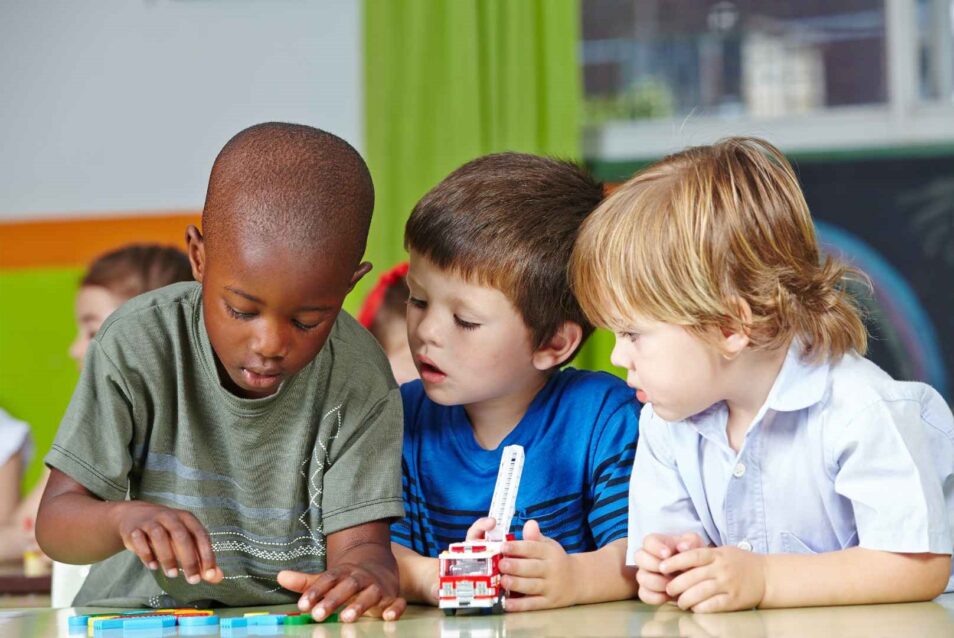


Kindergartens in Singapore play a pivotal role in nurturing children’s academic development and cultivating their social and emotional growth. In a diverse and multicultural society like Singapore, where interpersonal relationships are crucial, fostering solid social skills from a young age is paramount for children to navigate various social settings effectively. Here are five practical ways that kindergartens in Singapore nurture and develop crucial social skills in children, laying a solid foundation for their future success:
1. Promoting Peer Interaction and Collaboration
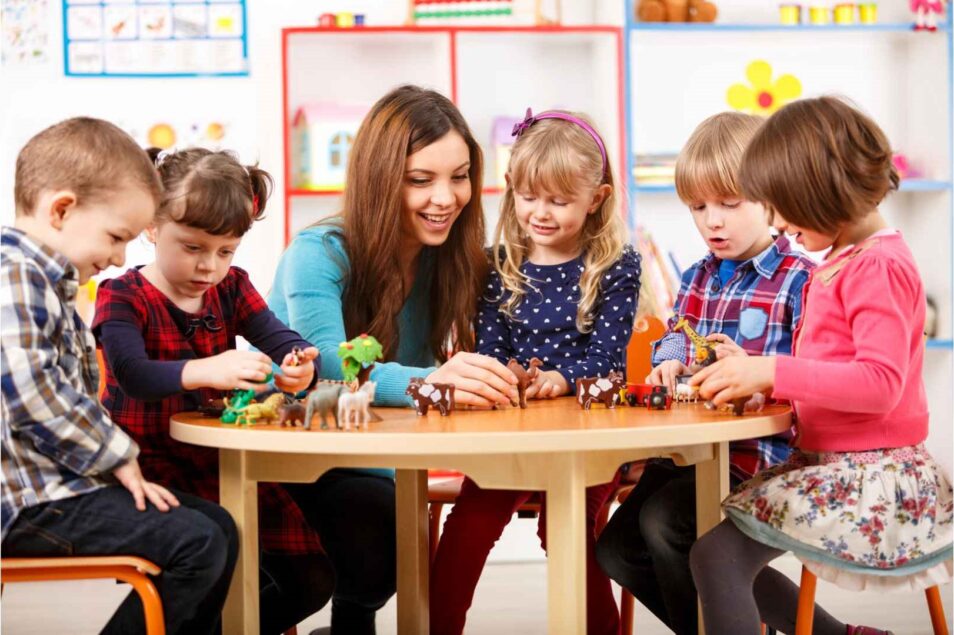
Kindergartens prioritise creating environments that encourage peer interaction and collaboration. Through group activities, games, and collaborative projects, children learn to communicate effectively, share resources, take turns, and work together towards common goals. These cooperative experiences provide children with opportunities to develop essential social skills such as empathy, cooperation, and teamwork, which are vital for building positive relationships with peers inside and outside the classroom.
2. Encouraging Communication and Expressive Language
Effective communication is fundamental to strong social skills, and kindergartens in Singapore strongly emphasise fostering language development and communication skills in children. Through storytelling, conversations, role-playing, and show-and-tell activities, children are encouraged to express their thoughts, feelings, and ideas clearly and confidently. Kindergartens empower children to connect with others, build friendships, and navigate social interactions effectively by providing a supportive and nurturing environment where children feel comfortable expressing themselves.
3. Teaching Conflict Resolution and Emotional Regulation
Conflict is a natural part of social interaction, and kindergartens play a crucial role in teaching children how to resolve conflicts peacefully and manage their emotions appropriately. Through guided discussions, role-playing scenarios, and problem-solving activities, children learn essential conflict-resolution skills such as active listening, compromising, and finding mutually acceptable solutions. Also, kindergartens provide children with a safe space to express their emotions, learn to recognize and label their feelings and develop healthy coping strategies, fostering emotional intelligence and resilience.
4. Cultivating Empathy and Respect for Diversity
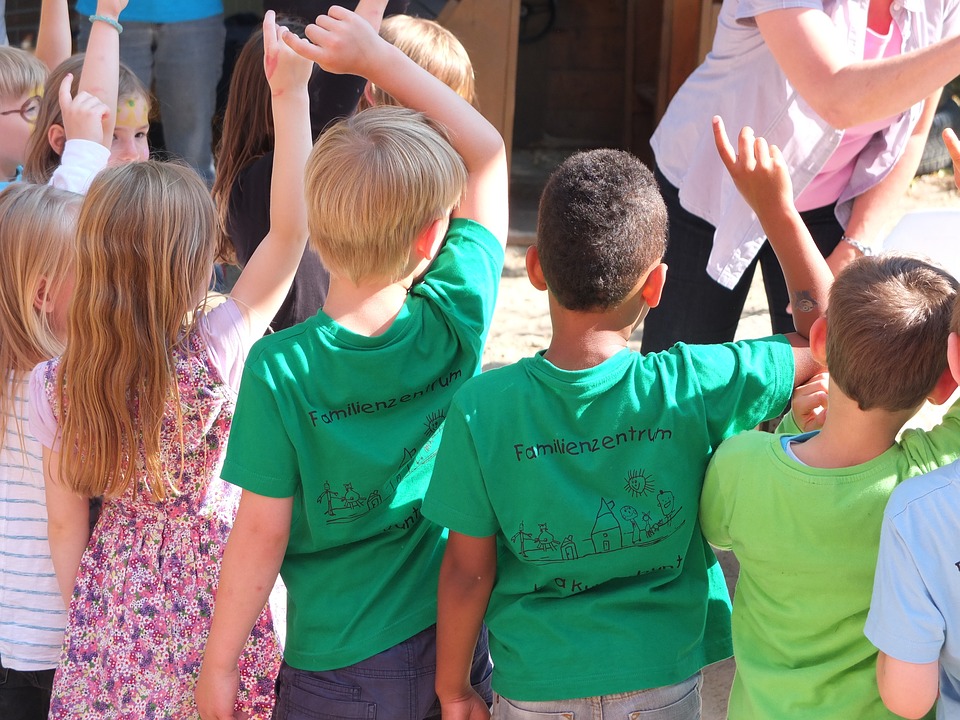
In a diverse and multicultural society like Singapore, children must develop empathy and respect for others’ perspectives, backgrounds, and cultures. Kindergartens promote empathy by exposing children to diverse experiences, stories, and traditions, celebrating cultural festivals, and encouraging discussions about differences and similarities. By fostering an inclusive and accepting environment where every child feels valued and respected, kindergartens teach children to appreciate diversity, practice empathy, and treat others with kindness and respect.
5. Facilitating Play-Based Learning
Kindergartens in Singapore recognize the importance of play in fostering social skills and emotional development. Through free play, imaginative play, and structured play activities, children learn to take turns, share, negotiate, and collaborate with their peers. Play-based learning encourages creativity, problem-solving, and social interaction, providing children with opportunities to practise and refine their social skills in a fun and engaging way.
In conclusion, kindergartens in Singapore play a crucial role in nurturing and developing essential social skills in children, which are vital for their success in both academic and social domains.
Kindergartens equip children with the skills and mindset they need to thrive in an increasingly interconnected world by prioritising social-emotional learning alongside academic achievement. Through peer interaction, communication activities, conflict resolution strategies, and exposure to diversity, children learn to navigate social situations confidently, build meaningful relationships, and contribute positively to their communities.












 That is why, if you wanted to look for excellent kind of parenting, then it is time for you to move forward. Education & Parenting are two hard things. You need to work on them for you to be able to take advantage of the things that you can get from it. Of course,